


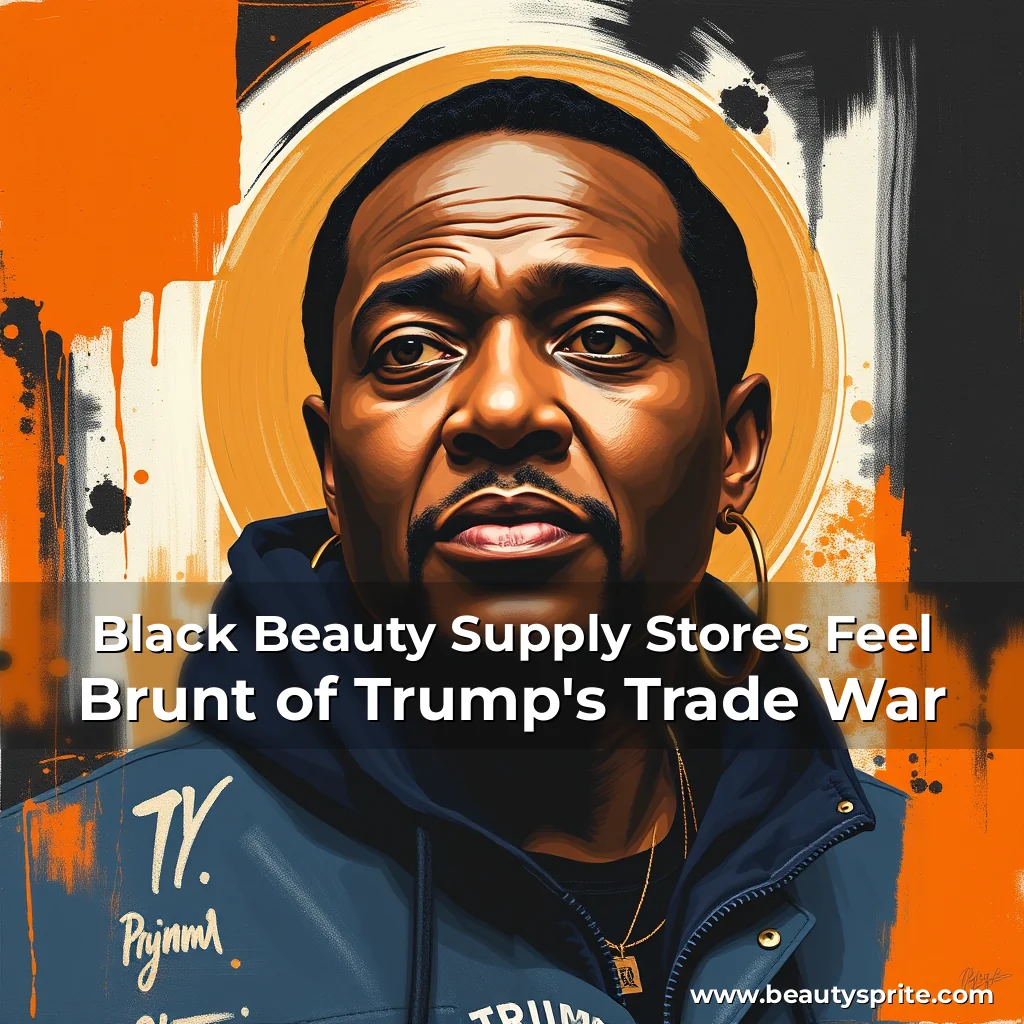
The effects of Trump’s trade war are being felt by Black-owned beauty supply stores across the United States, with reports indicating that the industry, which is worth over $2.5 billion, is heavily reliant on foreign exporters for its products.
- Hair wefts used for sew-ins
- Ingredients for ethnic hair care products
- Other hair care products
These products are sourced from countries such as China, India, and Malaysia, which are subject to tariffs imposed by the US government.
| Country | Tariff Increase |
|---|---|
| China | 145% |
| India | 50% |
| Malaysia | 10% |
The increase in tariffs is causing significant strain on small and minority-owned businesses, including those in the beauty supply industry. “It’s just been really scary for a small business that’s not been open long,” said Chasity Monroe, owner of Pink Noire, a Black-owned hair and beauty supply store in Memphis, Tennessee. Monroe noted that she buys many of her products directly from vendors in China, so she’s responsible for the taxes when they enter the country. “As suppliers begin to increase their prices, I’ll be forced to pass on the costs to customers,” Monroe said. This may result in higher prices for customers, and for Monroe, it could mean selling synthetic braiding hair packs for prices as high as $10 to $12. To mitigate the effects of the tariffs, some buyers are encouraged to take advantage of the 90-day pause on certain tariffs for countries like India, Cambodia, and Malaysia. However, this may not be an option for all small businesses, particularly those without the necessary banking relationships to access capital and liquidity.
- Difficulty in accessing capital and liquidity
- Lack of banking relationships
- High inventory costs
This is a major concern for economists, who point out that many Black businesses do not have the necessary resources to take advantage of these pauses.
“"We know already that many Black businesses don’t have the banking relationships that would allow them the access to capital and the liquidity to go out and make large purchases so that they could actually have inventory,”
said Trevon Logan, an economist at Ohio State University. LaWanda Majors, owner of MajorStyllz Beauty Supply just outside of Nashville, is another business owner who is feeling the pinch. She said that a Brazilian bundle she purchases from an overseas vendor was increasing from $125 to $175. Majors is currently marking everything down in her store in hopes of bringing in the money she would need to buy more inventory as prices increase. “I’m just stuck right now,” she said. “I just put it in God’s hands.”
“I’m just going to have to wait and see what happens,” said Chasity Monroe.


news is a contributor at BeautySprite.com. We are committed to providing well-researched, accurate, and valuable content to our readers.
You May Also Like


Hair Care Step-by-Step Tutorial
The Ultimate Hair Care Journey: From Roots to Ends In an era where hair is often considered a crown jewel...

Hair Care on a Budget: Money-Saving Tips
Unlocking Luscious Locks: A Comprehensive Hair Care Journey In a world obsessed with self-care, your hair deserves equal attention. Whether...

The Beauty of Being Unique: A Staten Island Salon Owner's Inspiring Journey
In a world where conformity is often celebrated, Tierra Milton, a Staten Island salon owner, is challenging the status quo...

Best Hair Care Tips and Strategies
The Ultimate Guide to Radiant Locks: Expert Hair Care Secrets Revealed In today’s fast-paced world, achieving and maintaining healthy hair...