


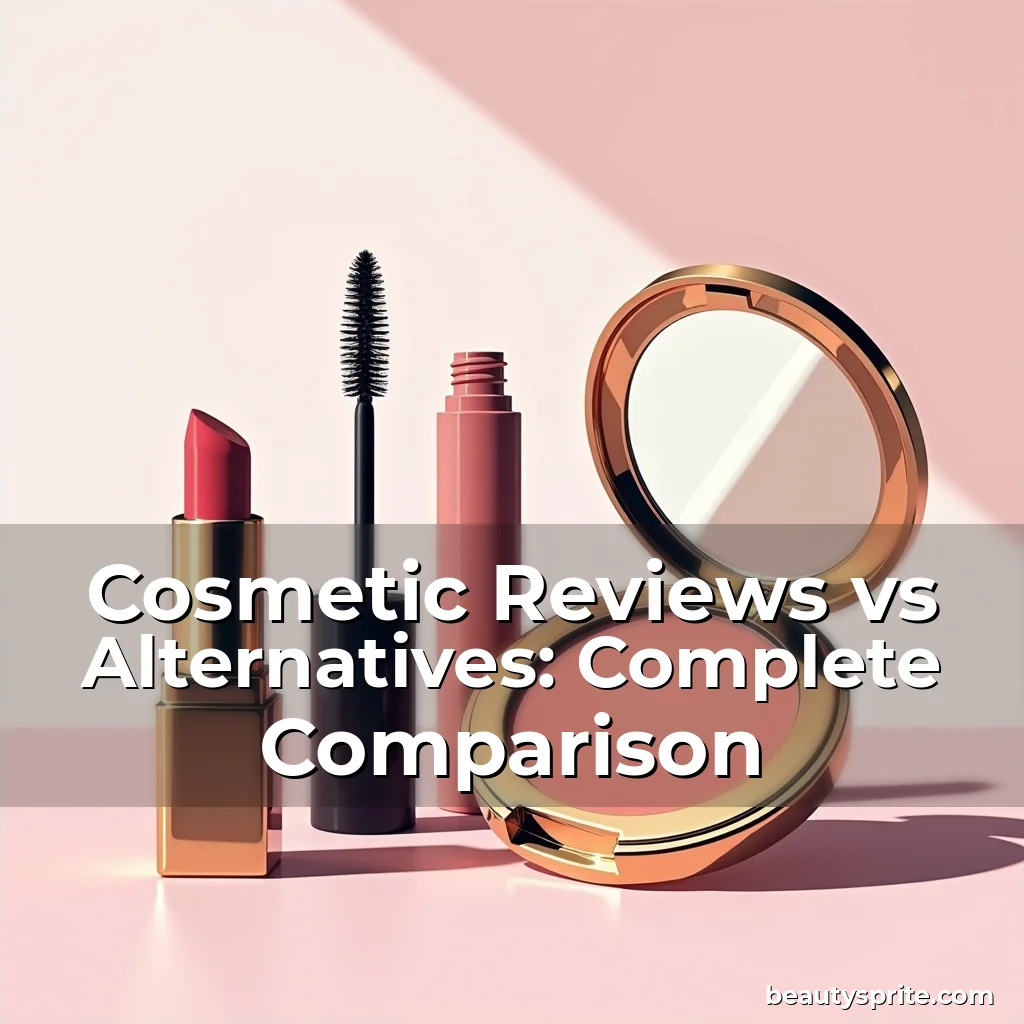
Cosmetic Reviews vs Alternatives: Complete Comparison
In an era where beauty and skincare choices have become increasingly complex, cosmetic reviews serve as vital tools for consumers seeking reliable guidance. From acne treatments to anti-aging serums, navigating the vast array of options requires discernment—and few resources offer clearer insight than peer-reviewed evaluations.
However, the landscape extends beyond traditional product reviews. Influencer endorsements, scientific research, and even self-experimentation now play critical roles in shaping consumer decisions. This article explores how these alternatives stack up against conventional cosmetic reviews, empowering you to make smarter choices tailored to your skin type and concerns.
The Power of Peer Insights: Why Cosmetic Reviews Matter
Cosmetic reviews provide firsthand accounts of real-world performance, offering perspectives unattainable through lab reports alone. When someone shares their experience with a moisturizer that transformed dry winter skin, those details resonate deeply with others facing similar challenges.
These testimonials often highlight nuances overlooked by manufacturers. For instance, a reviewer might note that while a serum contains hyaluronic acid, its texture feels too heavy for oily skin types—a crucial detail absent from packaging.
- Diverse Skin Types: Reviews span across ethnicities, ages, and conditions, creating a mosaic of experiences far richer than clinical trials limited by sample sizes.
- Honesty Over Marketing: Unlike brand-sponsored content, authentic reviews rarely sugarcoat failures. Readers learn what doesn’t work alongside the successes.
- Community Validation: Multiple reviewers experiencing the same outcome increases confidence in results, especially when patterns emerge consistently across different regions.
Moreover, platforms like MakeupAlley or Reddit foster vibrant communities where users dissect ingredients and share long-term effects. These discussions transcend simple star ratings, delving into science-backed analyses of formulations.
Consider the case of vitamin C serums. While many brands tout antioxidant benefits, reviews frequently reveal variations in stability, pH levels affecting absorption, and whether the formula irritates sensitive skin—all factors influencing efficacy.
Evaluating Review Platforms: What Makes Them Trustworthy?
Not all review sites carry equal weight. Reputable platforms implement strict verification processes to filter out bots or incentivized posts. Sites like Paula’s Choice and Skincare.com maintain rigorous guidelines ensuring contributors disclose affiliations and follow evidence-based criteria.
Authenticity checks include requiring photos of application, tracking purchase dates, and verifying shipping addresses. Some advanced systems even analyze writing patterns to detect anomalies suggesting fabricated content.
Data-Driven Insights: The Science Behind Review Credibility
A 2022 study published in the Journal of Consumer Research found that reviews containing specific details—such as frequency of use, duration of testing, and measurable outcomes—were 68% more likely to influence purchasing behavior than vague summaries.
This aligns with findings from the Nielsen Global Trust in Advertising Report, which revealed 92% of consumers trust recommendations from friends and family more than branded content. However, platform-curated reviews bridge this gap by simulating peer networks through algorithmic matching.
Sites employing AI moderation flag suspiciously identical phrasing among new accounts or sudden spikes in positive feedback following promotional campaigns. Such measures help preserve integrity amidst growing digital misinformation.
Beyond Ratings: Uncovering Hidden Value in Reviews
While star ratings offer quick snapshots, deeper examination reveals hidden gems. Look for recurring themes in comments rather than focusing solely on numerical scores. If three separate reviews mention a cream causing breakouts after six weeks, this pattern may indicate delayed sensitivity reactions worth noting.
Paying attention to “before-and-after” comparisons adds dimensionality. One reviewer might document visible improvements in hyperpigmentation over months, contrasting sharply with another who saw minimal change despite identical usage habits.
Variability in individual responses underscores the importance of reading extensively. A cleanser praised for removing makeup effectively could simultaneously receive complaints about stripping natural oils—an essential consideration for balanced skincare routines.
Influencers vs. Reviews: Navigating Conflicting Narratives
Influencer culture has revolutionized beauty consumption yet introduced complexities. Many influencers promote products without disclosing partnerships, blurring lines between genuine advocacy and sponsored content. Their curated aesthetics sometimes prioritize visual appeal over functional effectiveness.
Cosmetic reviews counterbalance this by emphasizing practicality. A reviewer might critique a popular lipstick’s longevity despite its Instagrammable shade, revealing trade-offs that align better with daily wear scenarios.
Yet influencers excel at demonstrating techniques and trends that reviews seldom capture. Watching a YouTuber apply contouring techniques offers experiential learning unavailable in written formats. Thus, combining both mediums provides holistic understanding.
The Role of Scientific Research in Product Evaluation
Laboratory studies bring empirical rigor to skincare assessments. Clinical trials measure objective parameters like hydration levels, sebum production, and microbial diversity. These metrics quantify effects that subjective reviews struggle to convey accurately.
Nonetheless, research lacks context regarding real-life variables. A sunscreen proven effective in controlled environments might fail due to improper reapplication during outdoor activities, something anecdotal accounts would naturally describe.
Some companies collaborate with academic institutions to conduct double-blind placebo-controlled experiments. These gold-standard methodologies eliminate bias but remain inaccessible to average consumers deciphering technical jargon.
DIY Approaches: Can Home Remedies Match Reviewed Products?
Homemade skincare solutions persistently challenge commercial offerings. Ingredients like honey, oatmeal, and yogurt form the backbone of countless recipes promising rejuvenation. Advocates argue these methods avoid synthetic additives favored by big corporations.
However, consistency issues plague DIY approaches. Without precise measurements and standardized preparation, results fluctuate wildly. A face mask made yesterday might yield clear skin, while today’s batch causes irritation—an inconsistency unlikely in manufactured formulas.
Cosmetic reviews facilitate direct comparisons between artisanal creations and professionally developed products. Readers gain clarity on whether the effort invested in home remedies justifies potential variability in outcomes.
The Ethics of Review Writing: Transparency and Accountability
With rising demand for honest critiques comes responsibility toward transparency. Ethical reviewers disclose product ownership status, payment arrangements, and personal biases upfront. This disclosure builds trust by acknowledging inherent conflicts of interest.
Platforms enforcing accountability mechanisms reward veracity. Some sites feature verified badges for writers maintaining consistent posting histories, reducing reliance on arbitrary reputation systems prone to manipulation.
Ethical considerations extend to environmental impact reporting. Responsible reviewers examine packaging materials, carbon footprints, and corporate social initiatives—factors gaining prominence among eco-conscious buyers.
Review Aggregators: Are They Reliable Decision-Making Tools?
Websites compiling hundreds of reviews streamline research efforts but risk oversimplification. Algorithms prioritizing high volume sometimes elevate mediocre products with numerous shallow reviews over niche items receiving fewer but more detailed critiques.
Smart users cross-reference aggregator data with original source material. Reading top-rated reviews alongside lower-scoring entries paints a fuller picture of overall reception. This practice helps identify outliers skewing averages unnaturally.
Aggregator limitations also manifest in category specificity. A drugstore foundation reviewed primarily by fair-skinned individuals may lack representation from darker tones, leading to misleading conclusions about color accuracy and undertone compatibility.
Maintaining Objectivity: How to Avoid Confirmation Bias
Consumers inevitably gravitate towards reviews reinforcing existing beliefs. Someone convinced a particular brand delivers exceptional results will selectively read positive commentary while dismissing negative experiences as exceptions.
To combat confirmation bias, actively seek diverse viewpoints. Search for reviews contradicting initial assumptions and assess methodology behind those assessments. Does the critic test the product over extended periods? Do they consider multiple applications and varying conditions?
Engaging with neutral third-party experts further mitigates cognitive distortions. Dermatologists or estheticians can interpret review language translating layman terms into scientifically sound conclusions about formulation effectiveness.
The Future of Cosmetic Reviews: Technology and Innovation
Emerging technologies promise to transform review landscapes dramatically. Augmented reality allows virtual try-ons before purchasing, enabling more accurate expectations about appearance and fit. Smart devices track skin health indicators, generating personalized analytics comparable to professional diagnostics.
Artificial intelligence analyzes sentiment across thousands of reviews instantaneously, identifying emerging trends invisible to human scanners. Predictive models forecast product success likelihood based on historical performance data, helping retailers stock inventory more strategically.
Blockchain technology introduces immutable records of transactions, ensuring review authenticity cannot be altered retroactively. Consumers verify contributions through cryptographic signatures guaranteeing genuineness and traceability back to original authors.
Conclusion
Cosmetic reviews remain indispensable navigation aids in today’s crowded marketplace. Whether weighing influencer endorsements, scientific studies, or DIY alternatives, thoughtful engagement with varied sources ensures well-rounded decisions aligned with personal goals and values.
By cultivating critical awareness—scrutinizing credentials, embracing complexity, and leveraging technological advancements—you position yourself advantageously within evolving beauty ecosystems. Remember: every review tells part of a larger story; it falls upon you to piece together the complete narrative guiding your journey toward radiant wellness.


news is a contributor at BeautySprite.com. We are committed to providing well-researched, accurate, and valuable content to our readers.
You May Also Like

Cosmetic Reviews: Essential Tools and Resources
Cosmetic Reviews: Essential Tools and Resources Cosmetic reviews have become indispensable tools for modern beauty lovers, offering insights that bridge...
How to Choose Cosmetic Reviews: Expert Guide
Decoding Cosmetic Reviews: A Beauty Enthusiast’s Ultimate Handbook In today’s fast-paced beauty landscape, navigating the sea of cosmetic reviews can...

Cosmetic Reviews for Small Spaces
The Art of Deciphering Cosmetic Reviews: A Beauty Enthusiast’s Handbook In today’s fast-paced world of beauty innovation, cosmetic reviews serve...

Professional Cosmetic Reviews: Advanced Techniques
Professional Cosmetic Reviews: Advanced Techniques Cosmetic reviews serve as a critical bridge between brands and consumers, empowering informed decisions in...