

Both niacinamide and salicylic acid show up in nearly every “best for acne” recommendation list. They do related but different jobs, and many people end up confused about which to choose — or whether to use both. Here’s the practical comparison.
What each one actually does
Niacinamide (vitamin B3) is a water-soluble vitamin that boosts cellular NAD+. Its skin effects come from supporting barrier lipid synthesis, dampening inflammatory cytokines, and slowing the transfer of melanin between cells. It works across skin cells, regardless of where they’re located in the pore or on the surface.
Salicylic acid (BHA) is a beta hydroxy acid — oil-soluble, which is the critical difference from AHAs like glycolic. Because salicylic acid dissolves in oil, it can penetrate the sebum-filled pore and exfoliate from inside. It loosens the bonds between dead skin cells (mostly via desmosomal cleavage) and has mild antimicrobial activity against C. acnes.
The mechanisms barely overlap. Niacinamide is anti-inflammatory and barrier-restorative. Salicylic acid is exfoliating and pore-clearing. Saying one is “better” is like asking whether a toothbrush is better than dental floss — wrong frame of reference.
Side-by-side comparison
| Property | Niacinamide | Salicylic Acid |
|---|---|---|
| Type | Vitamin (B3 amide) | Beta hydroxy acid (exfoliant) |
| Solubility | Water-soluble | Oil-soluble |
| Where it works | Surface + inside cells | Inside pores + surface |
| Best for | Redness, PIH, oil control, barrier | Blackheads, whiteheads, comedones |
| Use case | Maintenance, daily | Active treatment, daily-to-weekly |
| Typical concentration | 2–5% | 0.5–2% |
| Tolerability | Excellent | Good, can dry sensitive skin |
| Pregnancy safe? | Yes | Topical <2% generally fine, check with OB |
| Sun sensitivity? | No | Mild increase |
| Time to results | 2–12 weeks | 1–4 weeks |
When to pick niacinamide
Niacinamide is the right primary choice when:
- Your main concern is sensitivity, redness, or rosacea-prone reactivity. Salicylic acid will irritate; niacinamide will calm.
- You’re dealing with post-inflammatory hyperpigmentation from past acne — dark marks left after the breakout has resolved. Niacinamide is significantly better here.
- You want a “set it and forget it” daily routine that doesn’t require careful titration. Niacinamide can be used twice daily indefinitely without strategy.
- You’re pregnant or breastfeeding and want a safer option.
- You already use a strong retinoid and need a calming counterweight, not another exfoliating active.
When to pick salicylic acid
Salicylic acid is the right primary choice when:
- You have blackheads or whiteheads as the main complaint. Niacinamide doesn’t dissolve sebum; salicylic acid does.
- You have congested, oily skin that’s prone to clogged pores. The pore-penetrating action is what you need.
- You want fast visible results — salicylic acid often shows visible texture improvement within a week or two.
- Your skin tolerates exfoliants well — no significant reactivity or barrier issues.
Can you use both?
Yes — and for many people, this is the optimal answer. The two ingredients tackle different parts of the same problem. A combined routine might look like:
AM:
- Cleanse
- 5% niacinamide serum
- Moisturiser
- SPF
PM:
- Cleanse
- Salicylic acid 2% (BHA exfoliant, leave-on)
- Niacinamide serum (after the BHA absorbs)
- Moisturiser
Or alternate nights:
- Mon/Wed/Fri — niacinamide only
- Tue/Thu/Sat — BHA + niacinamide
- Sun — recovery
Niacinamide doesn’t degrade salicylic acid or vice versa. They can be in the same serum without stability issues — Paula’s Choice’s BHA + niacinamide combinations have been formulated this way for years.
Frequency matters more than which one
A common mistake: thinking the choice of active matters more than how consistently you apply it. Niacinamide twice daily for three months will outperform salicylic acid used once a week. Salicylic acid every other night will outperform niacinamide applied once a week. Pick whatever you’ll actually use, and use it regularly.
If your skin can’t handle daily salicylic acid (drying, peeling, sensitivity), don’t push it — drop to three nights a week and let niacinamide do the daily lifting.
Specific products
Niacinamide options:
- The Ordinary Niacinamide 10% + Zinc 1% ($8)
- Naturium Niacinamide Serum 12% ($18)
- Paula’s Choice 10% Niacinamide Booster ($46)
Salicylic acid options:
- The Ordinary Salicylic Acid 2% Anhydrous Solution ($8)
- Paula’s Choice 2% BHA Liquid ($35)
- CeraVe Resurfacing Retinol Serum (combines niacinamide + BHA + retinol — three-in-one starter for $20)
Combination products:
- Paula’s Choice 10% Niacinamide Booster + 2% BHA Liquid (stack them)
- The INKEY List Niacinamide Oil Control Serum (5% niacinamide + 1% salicylic acid)
The bottom line
Niacinamide and salicylic acid aren’t competitors. They’re complementary. If you can only choose one, pick based on your primary concern: niacinamide for redness/PIH/sensitive-acne, salicylic acid for blackheads/congestion. If you can use both, the combination outperforms either alone for most acne-prone or oily skin types. Just don’t overdo either — daily salicylic acid + 10% niacinamide + retinoid + AHA is a recipe for barrier collapse. Build slowly.
For more on niacinamide specifically, see our complete guide. For how niacinamide fits into an overall acne routine, see our acne-focused article.


You May Also Like


Professional Beauty Products: Advanced Techniques
The Science Behind Radiant Skin: Understanding Professional Beauty Products In an era where self-care is paramount, professional beauty products have...

The £30 discount on Shark's CryoGlow LED Mask: Boost your skin with under-eye depuffing and anti-ageing
The beauty tech industry has witnessed an influx of innovative products that claim to deliver a more radiant and youthful...

Beauty Bar Debate: Is This Dove Bar a Fake or the Real Deal?
The Rise of Online Retailers and Product Dupes —————————————— With the rise of online retailers like Temu and DHgate, product...
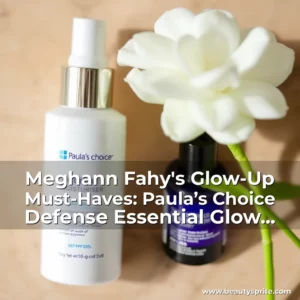
Meghann Fahy's Glow-Up Must-Haves: Paula’s Choice Defense Essential Glow Moisturiser SPF30
In a recent Vogue Beauty Secrets video, the talented Meghann Fahy, star of The White Lotus season 2 and Netflix’s...