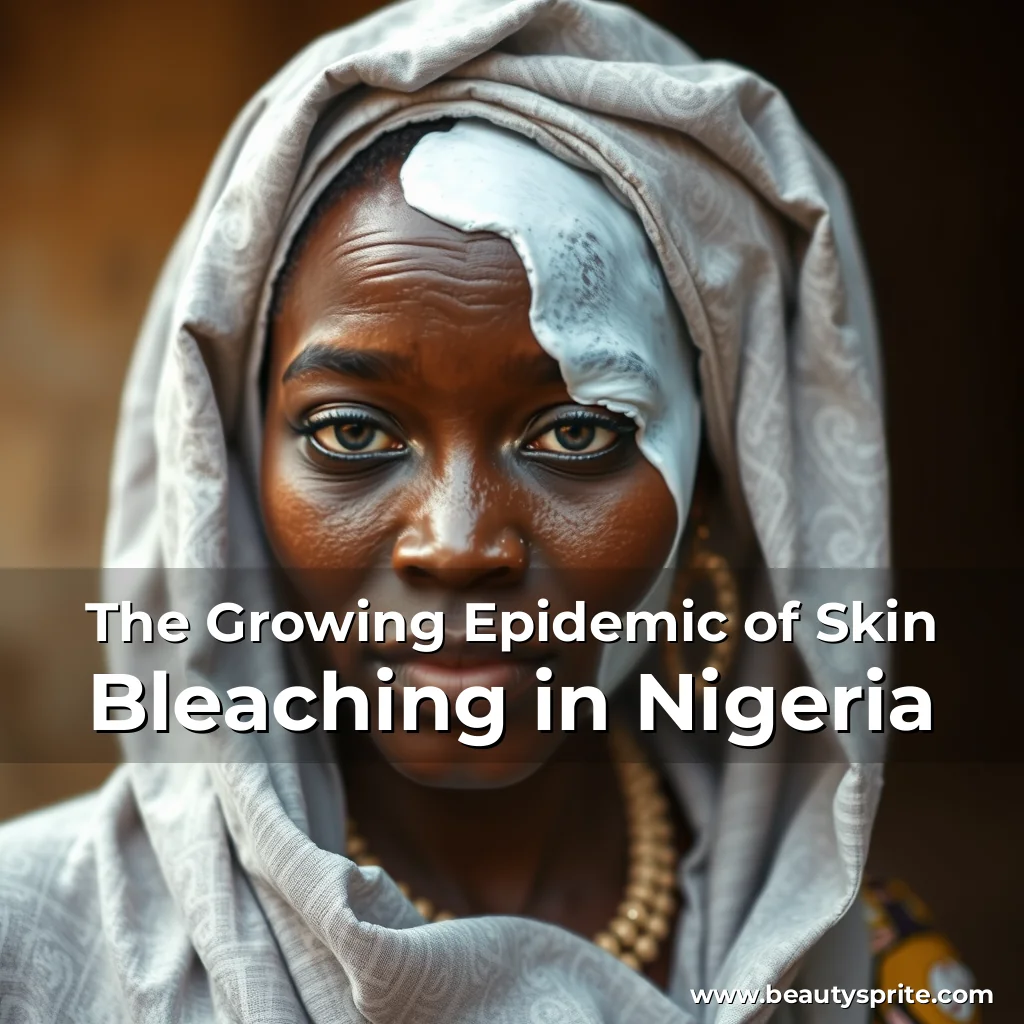
**The WHO has identified skin bleaching as a major public health concern globally and in Nigeria specifically**
The World Health Organisation (WHO) has released a report stating that 77 per cent of women in Nigeria use skin lightening products, a staggering percentage that surpasses that of any other country. This alarming statistic has been deemed a major public health concern by the WHO, which has termed skin bleaching a global public health problem. The data is stark, with 27.1 per cent of women in Africa using skin-whitening products regularly, with Nigeria being the country with the highest percentage. Google Trends data has shown that search terms such as “Skin whitening,” “Skin lightening,” and “Skin bleaching” are most popular in West African and South Asian countries. The top five countries in terms of search popularity are Nigeria, Ghana, Sri Lanka, Pakistan, and India. Nigeria takes the top spot, with 74 peak popularity, followed by Ghana with 71, and Sri Lanka with 67. “Skin bleaching” searches were most common in African countries, with Nigeria, Zimbabwe, Zambia, Uganda, and Ghana all featuring in the top five. The Caribbean and African countries also showed a high interest in “skin bleaching” searches, with St. Vincent and Grenadines, Jamaica, Ghana, Nigeria, and Zimbabwe all ranking high. The issue of skin bleaching is not a new phenomenon, but rather a continuation of the transatlantic slave trade and European colonization of African nations. During this period, fairer skin was promoted as a measure of beauty and a means of attracting the opposite sex and increasing female confidence. The use of skin bleaching products has become widespread, with sales projected to nearly double to $15.7 billion by 2030. The products are available in various forms, including creams, soaps, and injectables, and can be found in high-end stores and roadside vendors. However, the use of skin bleaching products poses serious health risks. The products contain hazardous substances such as corticosteroids, hydroquinone, and mercury, which can cause skin cancer, discolouration, and other serious health problems. Studies have shown that people with bleached skin have slower wound healing, delayed skin regrowth, and reduced tissue support. They are also at a higher risk of wound infection, dehiscence, and bleeding. Furthermore, the use of skin bleaching products is linked to serious systemic problems such as diabetes, hypertension, and renal diseases. The use of these products has become a major public health concern, requiring urgent attention. We at Daily Trust call for strong regulatory actions by the Nigerian Agency for Food, Drugs, Administration and Control (NAFDAC) to ensure that skin bleaching products meet the required safety standards. We also call on the Advertising Regulatory Council of Nigeria to stop the advertising of skin whitening products, and on religious and traditional leaders to educate Nigerians about the dangers of skin bleaching. The National Orientation Agency (NOA) should lead in increasing public awareness about the dangers of skin bleaching, and to educate consumers about the importance of only products that have been tested for safety. We also call on the government to take a proactive approach in protecting the health and wellbeing of Nigerians. The media and the entertainment industry must join the campaign to change the narrative and reinforce the reality that “Black is Beautiful.” Nigerians must be aware of the dangers of skin bleaching and it must stop. The world is watching as the epidemic of skin bleaching in Nigeria continues to spread. It is time for Nigerians to take a stand and demand change.
The Dangers of Skin Bleaching
* The products contain hazardous substances such as corticosteroids, hydroquinone, and mercury, which can cause skin cancer, discolouration, and other serious health problems. * The products can cause skin irritation, allergic reactions, and other skin problems. * The use of skin bleaching products is a major public health concern, requiring urgent attention. **The Campaign to Stop Skin Bleaching in Nigeria**
The campaign to stop skin bleaching in Nigeria is a complex issue that requires the involvement of various stakeholders. We at Daily Trust call on the government, industry, civil society, and media to join forces and demand change. The Nigerian Agency for Food, Drugs, Administration and Control (NAFDAC) should ensure that skin bleaching products meet the required safety standards. The government should take a proactive approach in protecting the health and wellbeing of Nigerians.
The Role of the Media and Entertainment Industry
* The media and entertainment industry must join the campaign to change the narrative and reinforce the reality that “Black is Beautiful.”
* They should promote positive body image and self-acceptance. * They should educate Nigerians about the dangers of skin bleaching. * They should promote traditional and cultural beauty standards. * They should challenge the perpetuation of colonial-era beauty standards. **The Way Forward**
The way forward is for Nigerians to take a stand and demand change. The government, industry, civil society, and media must join forces to protect the health and wellbeing of Nigerians.
Conclusion
The growing epidemic of skin bleaching in Nigeria is a serious public health concern that requires urgent attention. The WHO has identified skin bleaching as a major public health problem globally and in Nigeria specifically. The use of skin bleaching products poses serious health risks, including skin cancer, discolouration, and other serious health problems. The products contain hazardous substances such as corticosteroids, hydroquinone, and mercury.
The Solution Lies in Education and Awareness
Education and awareness are key to stopping the epidemic of skin bleaching in Nigeria. Religious and traditional leaders should play a role in educating Nigerians about the dangers of skin bleaching. They should promote traditional and cultural beauty standards and challenge the perpetuation of colonial-era beauty standards.
Nigerian Government’s Response to the Epidemic
The Nigerian government has a responsibility to protect the health and wellbeing of its citizens. In response to the growing epidemic of skin bleaching in Nigeria, the government should take the following steps:
* Ensure that skin bleaching products meet the required safety standards. * Stop the advertising of skin whitening products. The government should also work with the National Orientation Agency (NOA) to increase public awareness about the dangers of skin bleaching and to educate consumers about the importance of only products that have been tested for safety. The government should also work with the media and the entertainment industry to change the narrative and reinforce the reality that “Black is Beautiful.”
International Cooperation
International cooperation is essential in addressing the growing epidemic of skin bleaching in Nigeria. The World Health Organisation (WHO) and other international health organisations should work with the Nigerian government to:
* Provide technical assistance and support to the Nigerian government in addressing the epidemic. * Increase public awareness about the dangers of skin bleaching. * Educate Nigerians about the importance of only products that have been tested for safety. The WHO and other international health organisations should also work with civil society and the private sector to:
* Provide funding and resources to support efforts to address the epidemic.
Nigerian Citizens’ Role
Nigerian citizens have a role to play in addressing the growing epidemic of skin bleaching in Nigeria. Citizens should:
* Refuse to use skin bleaching products. * Support efforts to address the epidemic. Citizens should also work with the government, civil society, and the private sector to:
* Increase public awareness about the dangers of skin bleaching. * Educate others about the importance of only products that have been tested for safety. Education and awareness are key to stopping the epidemic. The media and the entertainment industry must join the campaign to change the narrative and reinforce the reality that “Black is Beautiful.”
Nigerian citizens have a role to play in addressing the growing epidemic of skin bleaching in Nigeria. Citizens should refuse to use skin bleaching products, promote traditional and cultural beauty standards, challenge the perpetuation of colonial-era beauty standards, and support efforts to address the epidemic.