


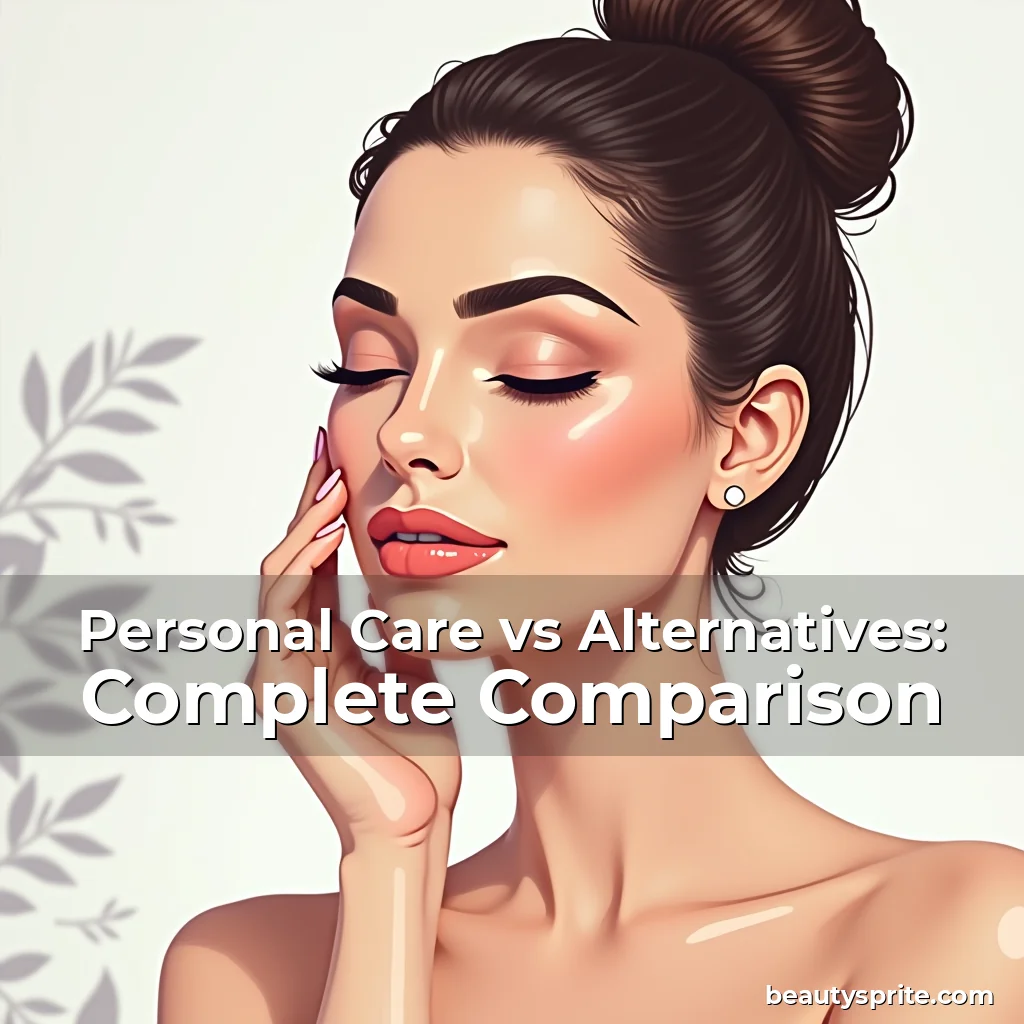
Personal Care vs Alternatives: Complete Comparison
In today’s fast-paced world, personal care has evolved far beyond mere hygiene—it’s a cornerstone of identity, confidence, and holistic well-being. For those navigating the dynamic landscape of beauty and skincare, understanding personal care isn’t just beneficial; it’s transformative.
The distinction between personal care and alternative methods often lies in intentionality, effectiveness, and long-term results. Whether choosing natural remedies, tech-driven solutions, or conventional routines, clarity is essential to achieve desired outcomes.
Understanding Personal Care
At its core, personal care refers to the practices individuals adopt to enhance their physical appearance, manage their skin health, and maintain a sense of well-being. Unlike generalized self-care, which encompasses mental and emotional health, personal care zeroes in on outward grooming and skincare.
This approach includes everything from daily cleansing and hydration to advanced treatments targeting acne, aging, or hyperpigmentation. Its purpose extends beyond aesthetics; it fosters discipline, boosts self-esteem, and aligns with personal values regarding health and self-image.
Key components of personal care vary widely depending on individual needs, cultural background, and product preferences. However, consistency and quality remain universal factors in determining success.
For example, someone struggling with oily skin might prioritize oil-free cleansers and non-comedogenic moisturizers, while another person with dryness might lean toward rich balms and hydrating serums.
- Cleansing: A fundamental step in removing impurities and preparing the skin for subsequent treatments.
- Moisturization: Essential for maintaining skin barrier integrity and preventing dehydration-related damage.
- Sun protection: Critical in defending against UV-induced premature aging and skin cancer risks.
Why Personal Care Matters Beyond Appearance
While vanity drives many to invest in personal care routines, the psychological and physiological benefits extend far beyond superficial enhancements. Research shows that regular skincare can reduce stress, improve sleep quality, and even elevate mood.
A study published in the Journal of Cosmetic Dermatology found that participants who followed structured skincare regimens reported higher satisfaction with their appearance and increased confidence levels. Such findings underscore the therapeutic value of personal care practices.
Moreover, adopting mindful habits like exfoliation or aromatherapy can create moments of relaxation amidst chaos—a form of mini-retreat designed to reset mental states and promote balance.
Consistent care routines foster a deeper connection with one’s body, enhancing awareness of changes in texture, tone, and sensitivity patterns. This heightened consciousness empowers individuals to address emerging concerns promptly.
Components of an Effective Personal Care Routine
An optimal routine balances simplicity with efficacy, avoiding overwhelm while maximizing benefits. Begin with assessing your primary concerns—whether they’re blemishes, dullness, fine lines, or excess oil—and select products accordingly.
Cleansing agents come in various forms, from foaming gels ideal for combination skin to creamy emulsifiers suited for sensitive types. Always choose pH-balanced formulas to preserve skin microbiome health.
Treatment serums deliver concentrated actives like retinoids, vitamin C, or hyaluronic acid. Layering these appropriately ensures penetration without causing irritation or diminishing potency.
Sunscreens serve dual purposes: protecting against sunburn and guarding against photodamage. Opt for broad-spectrum variants with SPF 30+ ratings and reapply every two hours when exposed outdoors.
Masks and exfoliants provide periodic deep cleaning or nourishment. However, moderation is key—they shouldn’t replace daily basics but complement them strategically.
The Role of Technology in Modern Personal Care
Advancements in skincare technology have revolutionized accessibility and precision. Devices like LED light therapy panels, microcurrent facial toners, and smart mirrors offer data-driven insights and targeted interventions.
According to market research firm Grand View Research, the global cosmetic devices industry is projected to reach $8.9 billion by 2030, growing at a compound annual rate of 12%. Consumers increasingly seek hybrid solutions combining traditional methods with digital innovations.
These gadgets cater to diverse budgets—from affordable handheld rollers promoting circulation to high-end lasers tackling severe acne scars. Their integration into daily life reflects shifting priorities toward efficiency and measurable outcomes.
However, relying solely on tech tools carries risks. Without proper foundation, devices might exacerbate existing conditions or fail to produce intended effects. Professional consultation remains advisable before incorporating novel technologies.
Differentiating Personal Care from Alternative Methods
To grasp the full scope of personal care, contrast it explicitly with substitutes frequently confused with it. Natural remedies, DIY treatments, and minimalist approaches each possess merits but differ fundamentally in methodology and reliability.
Natural therapies leverage botanical extracts and organic ingredients, appealing to eco-conscious consumers concerned about synthetic additives. Yet, unregulated products lack standardized testing, increasing variability in safety profiles.
Minimalism advocates argue that fewer products yield better results, reducing clutter and simplifying routines. While potentially effective for basic upkeep, complex skin issues often require multi-step interventions.
Lifestyle-based strategies emphasize nutrition, exercise, and mindfulness as indirect contributors to radiant skin. Though impactful, these don’t substitute direct topical applications needed for visible transformations.
Broadly speaking, personal care occupies a middle ground—combining evidence-backed science with intentional ritualistic practices. It neither wholly rejects innovation nor dismisses tradition outright but synthesizes strengths from multiple realms.
Cultural Influences Shaping Personal Care Trends
Culturally, attitudes toward personal care reveal fascinating contrasts reflecting historical legacies and contemporary values. In East Asia, meticulous skincare rituals rooted in centuries-old traditions prioritize prevention over correction.
Japanese women famously employ double-cleansing techniques involving oil-based removers followed by water-soluble foams—an approach originating from Edo-period beauty customs. Similarly, Korean beauty emphasizes layering numerous lightweight products for cumulative benefits.
Conversely, Western cultures often favor quick fixes and maximalist coverage, evidenced by widespread use of concealer-heavy foundations and airbrush finishes. Nonetheless, interest in K-beauty and J-beauty philosophies grows rapidly among international markets.
Religious practices also influence personal care. Hindu traditions incorporate sacred oils like coconut or sesame for massage rituals, while Islamic teachings encourage modesty-focused styling practices devoid of excessive ornamentation.
Globalization has blurred these boundaries, enabling cross-cultural exchanges that enrich collective knowledge. Today’s beauty enthusiasts benefit immensely from learning lessons embedded within ancient wisdom systems worldwide.
Challenges Hindering Consistency in Personal Care
Despite best intentions, maintaining adherence proves challenging for many reasons. Life transitions—like career shifts, parenthood, or relocation—often disrupt established routines unpredictably.
Time constraints loom large as modern lifestyles demand constant availability. Busy professionals juggling work deadlines find limited windows for thorough skincare application, leading to skipped steps or rushed procedures.
Economic pressures dictate purchasing decisions, especially during economic downturns. High-end products become inaccessible, compelling users to compromise on quality despite knowing its importance.
Emotional barriers manifest subtly too. Feelings of inadequacy triggered by comparing oneself to social media influencers can derail motivation altogether. Worse still, negative experiences with harsh chemicals breed avoidance behaviors.
Environmental factors add complexity. Pollution exposure increases free radical formation, accelerating oxidative stress damage unless countered with antioxidants and protective barriers.
Overcoming these hurdles demands resilience, flexibility, and sometimes professional support. Building adaptable frameworks rather than rigid schedules enhances sustainability significantly.
Practical Tips for Optimizing Your Regimen
Enhancing personal care doesn’t necessarily mean spending more money or following fad diets. Small strategic modifications yield substantial dividends when executed consistently over time.
Establish realistic expectations: Understand that progress takes months—not weeks—to materialize visibly. Celebrate minor victories like improved texture or reduced breakouts instead of fixating solely on overnight miracles.
Create anchor points: Tie routine tasks to fixed times of day (e.g., brushing teeth after breakfast) or locations (applying serum while waiting for coffee). Associative memory tricks reinforce habit formation effortlessly.
Vary textures and scents**: Introduce new sensations occasionally to prevent boredom. Swap gel moisturizer with cream versions seasonally or experiment with invigorating citrus fragrances during winter months.
Track progress systematically**: Document changes through photographs taken weekly under identical lighting conditions. Observe subtle differences in pore size, redness reduction, or wrinkle softening gradually becoming apparent.
Engage community resources**: Join online forums dedicated to sharing successes/failures anonymously. Peer validation bolsters perseverance amid setbacks and keeps spirits elevated during plateaus.
Future Directions in Personalized Skincare
As biotechnology advances exponentially, personalized medicine is transitioning swiftly into dermatological fields. Soon-to-launch AI-powered diagnostic apps promise customized treatment plans calibrated precisely according to genetic markers.
Preliminary trials show promising results using DNA analysis combined with machine learning algorithms predicting individual responses to various compounds accurately. This paradigm shift signals a future where one-size-fits-all products become obsolete entirely.
Simultaneously, sustainable packaging initiatives gain traction. Brands now recycle empty containers through return programs or utilize compostable materials derived from plant starches. Environmentally responsible consumption resonates strongly with Gen Z demographics particularly.
Virtual consultations facilitated by telehealth platforms democratize access to expert advice regardless of geographical location. Remote assessments enable timely intervention before issues escalate irreparably.
Lastly, inclusivity emerges as paramount concern. Shade ranges expanding beyond traditional five-point scales accommodate diverse melanin concentrations fairly. Non-binary gender-neutral formulations reflect changing societal norms progressively.
Conclusion
Ultimately, personal care embodies a fusion of scientific rigor, cultural heritage, and self-expression. It transcends ordinary routines transforming into empowering journeys toward greater authenticity and vitality.
By embracing deliberate choices aligned with personal aspirations, anyone can cultivate a bespoke regimen honoring uniqueness while benefiting from timeless principles underlying successful skincare philosophies globally.


news is a contributor at BeautySprite.com. We are committed to providing well-researched, accurate, and valuable content to our readers.
You May Also Like


Professional Personal Care: Advanced Techniques
Mastering Personal Care: Expert Insights for Radiant Skin and Wellness In today's fast-paced world, personal care has evolved beyond mere...
Personal Care on a Budget: Money-Saving Tips
Fundamental Principles of Effective Personal Care At its core, personal care involves intentional actions aimed at enhancing physical vitality and...

Watsons Launches K-12 Stem Education Initiative!
K-Beauty Campaign Celebrates Dreams of Beauty at Mid Valley Exhibition Centre K-Beauty Festa 2025: A Month-Long Celebration of Korean Beauty...

The Birth of Lovetc: A Luxurious Venture in the Indian Beauty Market
The Indian beauty industry has witnessed a significant transformation in recent years, with the demand for high-performance color cosmetics on...