The Sample-First Shade Match Plan
Find your foundation shade in any maker's range: read the Color Match answer as a short list, swatch it in two sessions, cap what samples may cost, test before the full bottle, and size a second shade to its open-jar date
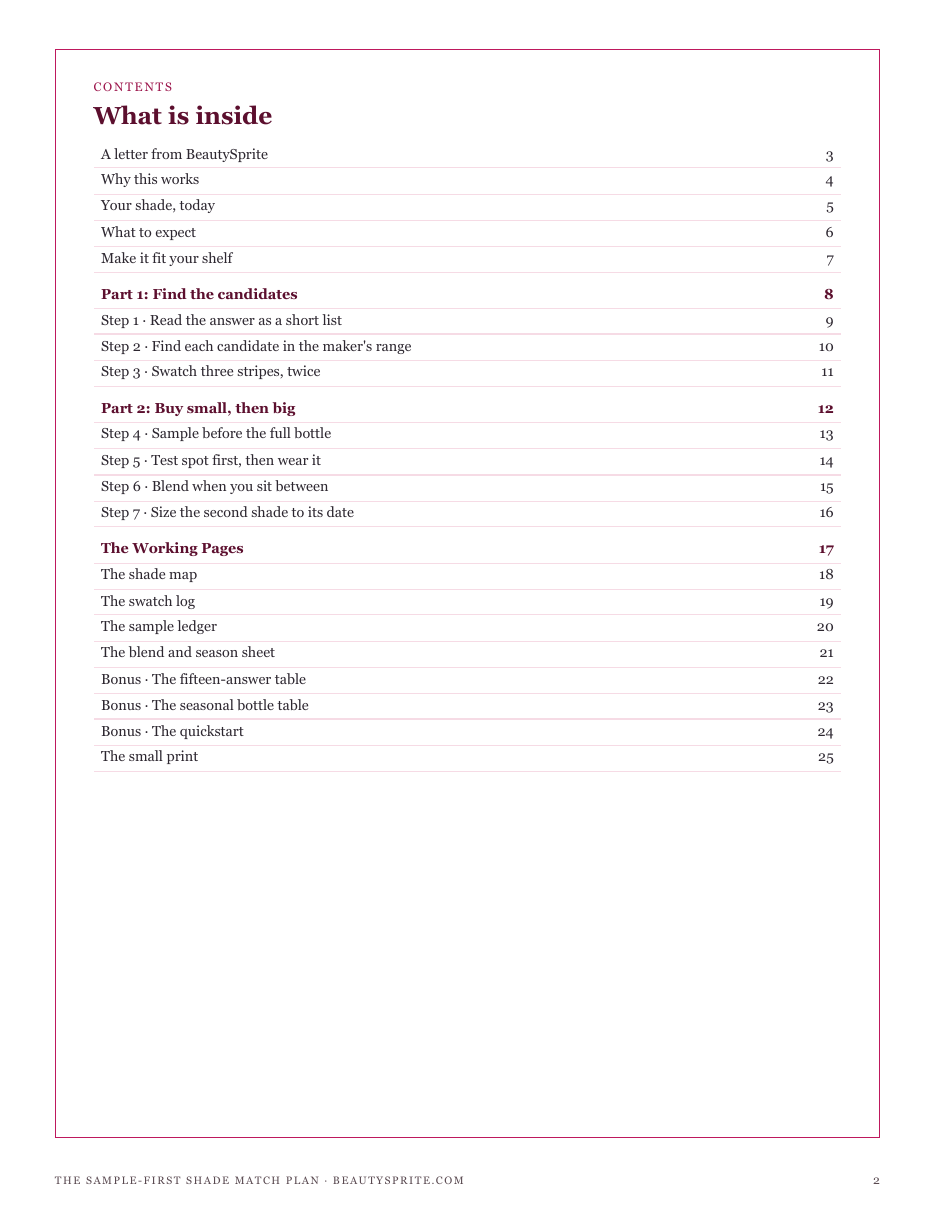
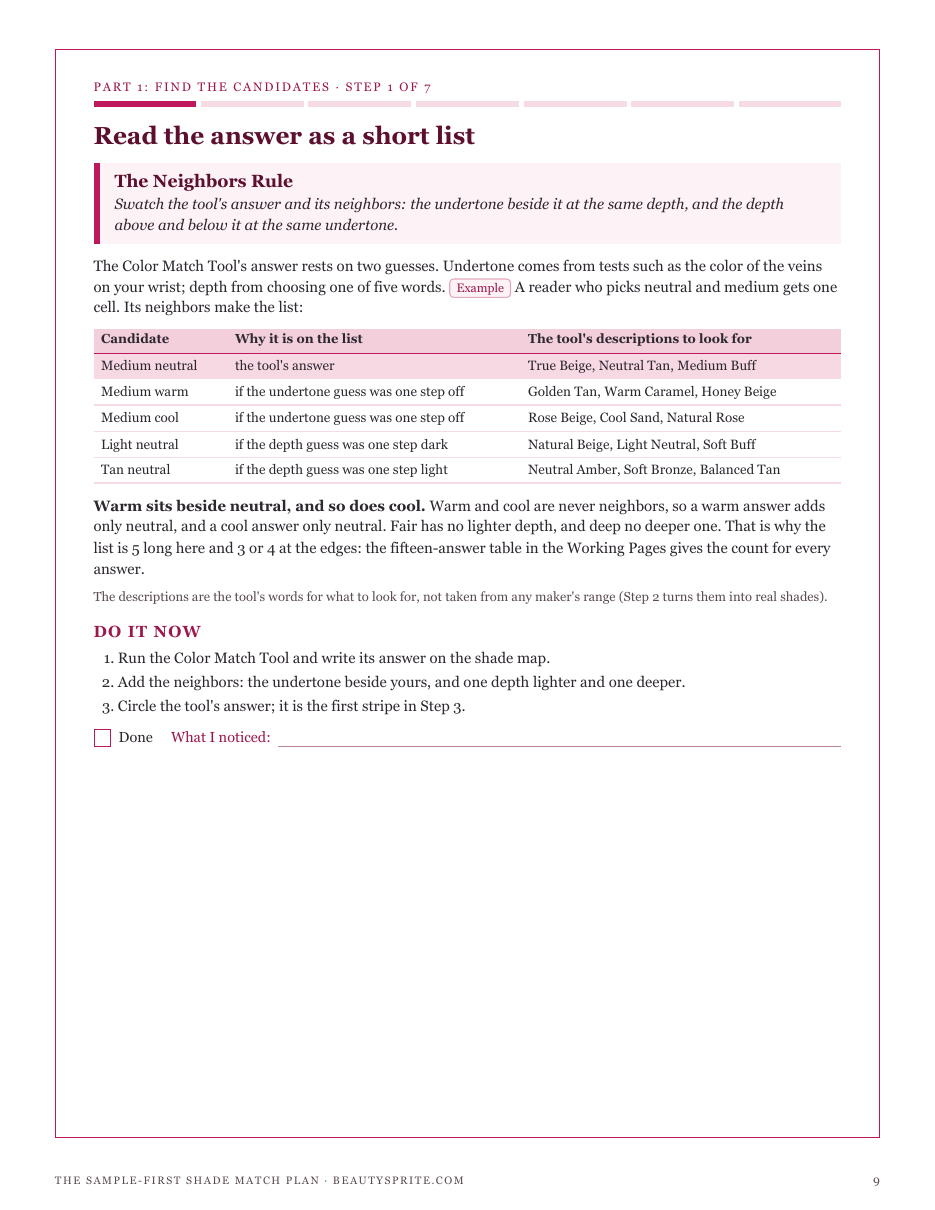
BeautySprite's Color Match Tool asks your undertone and your skin depth and answers with one of fifteen cells: a shade family and three descriptions to look for. Its own help says to narrow the field, then test before you commit. It never says how wide the field is, what testing should cost, or what to do when you sit between two shades, and each of its two answers rests on a guess that can be one step off. The Sample-First Shade Match Plan works it through. In its worked example, a reader who picks neutral and medium has five candidates, not one: the answer, warm and cool beside it, and one depth lighter and deeper, swatched in two sessions of three stripes. Each is found in the maker's own chart. Samples are capped so they never cost more than one wrong bottle: at $9 a sample against a $38 bottle, four ($36). A test spot and a working week of wear come before the full size, two shades are blended by a ratio you can repeat, and a seasonal shade is sized to its open-jar date: a 30 ml deeper shade blended 1:2 for one 91-day season has 12.67 ml (42%) left at its 12M date. Every figure is computed by the site's own Color Match Tool and Expiry Date Tracker; the prices, sizes and amounts are examples for you to replace. It names no maker, makes no claim about what a product does for skin, and does not cover sun protection. Included: 25 printable pages with seven steps, four working pages, a fifteen-answer table, a seasonal bottle table and a quickstart, plus a personalised sheet worked from your own Color Match answer and open-jar number.
Look inside
Two full pages from the plan, exactly as printed. Click either to read it at full size before you decide.
What is in it
- Step 1: the Color Match answer read as a short list: the answer, the undertone beside it, and one depth lighter and deeper (3 to 5 candidates)
- Step 2: each candidate found in the maker's own chart and key, never by a name or code from another range
- Step 3: two swatch sessions of three stripes on the jawline: undertone first, then depth
- Step 4: the sample cap: how many samples you can buy before they cost more than one wrong bottle
- Step 5: the test spot (seven to 10 days, as the American Academy of Dermatology describes) and a working week of wear before the full size
- Step 6: blending two shades by count, and how fast each bottle empties at your ratio
- Step 7: a seasonal second shade sized to the months you wear it before its open-jar date
- Four working pages: a shade map, a swatch log, a sample ledger, and a blend and season sheet
- A fifteen-answer table for every Color Match answer, a seasonal bottle table, and a quickstart that closes the score loop
- A personalised sheet: your candidates and swatch sessions from your Color Match answer, and your open-jar number against a seasonal shade
- ✓ 25 printable pages
- ✓ 10 sections, worksheets and templates
- ✓ A second PDF worked out from the numbers you enter
- ✓ No account needed, just an email address
- ✓ Instant download; link valid 7 days
Price includes any taxes. Sold by GrabURL, who handle checkout and support. The charge appears on your statement as GrabURL.
The plan picks up where the free Color Match Toolleaves off. The tool answers with one undertone and one depth, and its own help says to narrow the field, then test before you commit. The plan counts the field: the tool’s answer and its neighbors, found in the maker’s own range and swatched in two sessions of three stripes. Then it prices the testing: a cap on samples so they never cost more than one wrong bottle, a test spot and a wear week before the full size, blends written as a ratio, and a second shade sized to the months you wear it before its open-jar date, as the Expiry Date Tracker counts it. It is about shade only: it names no maker, makes no claim about what a product does for skin, and does not cover sun protection. Every figure in it is an example for you to replace.